
7/6 RUBY SUNS
PIC: KM 2025
Cocteau Twins - Pearly Dewdrops’ Drops (Official Video)
I SAY THEY’VE GOT A BLOODY CHEEK
What’s it all about, Alfie?
Cilla Black’s impassioned existential outburst resonates perhaps more deeply in these times of contention, but who was ‘Alfie’? Where is he now? And what are the chances he’ll ever provide a satisfactory answer to the Scouse songbird’s enquiry?
The most obvious explanation is that Cilla’s high-pitched plea was aimed in the direction of Alfie Elkins, womanizing protagonist of Bill Naughton’s 1963 ‘kitchen sink’ play, ‘Alfie’, filmed in 1966 with Michael Caine in the title role. In fact, while there’s no doubt the fictional Elkins is the subject of Burt Bacharach and Hal David’s title song for the film, (a big hit for Cilla, but performed on the US soundtrack by Cher, while Millicent Martin, of TW3 fame, sang the UK release version), Cilla insisted her paint-stripping, scream queen take on the source material was an attempt to articulate complex feelings about Alfred, called the Great, 9th century King of the West Saxons and subsequently King of the Anglo-Saxons, relating specifically to the nature of the administrative and military reforms carried out during the approximately 28-year rule of chronic haemorrhoids-sufferer Alfred.
According to Cilla Black in an interview recorded before her 2015 death in Estepona, southern Spain, cryptic lines like, ‘And if life belongs to the strong Alfie, What will you lend on an old golden rule?’ directly address Alfred’s victory over Viking forces at the Battle of Eddington, after which England was divided between the Anglo Saxons of Wessex and the northern Danelaw. Echoes of the conversion of the pagan King Guthrum to Christianity at Alfred’s instruction can be discerned in the original lyrics of the middle 8 section.
‘As sure as I believe there’s a Heaven above, Guthrum, henceforth known as Athelstan, I know there’s something much more. Something even non-believers can believe in.’
Historians will fight with knives and give each other mocking nicknames over this, but the real tragedy remains; despite intense speculation over many decades, the question hangs in the air unanswered…
What IS it all about, Alfie?!
TELL US, DAMN YOU!
NEWER THAN THE NEWEST DREAM
My favourite month of the year has been a bit of a washout this time thanks to the knockabout antics of the jet stream, which provided non-stop sun last year but had nothing but feverish, steamy wet days on offer for most of May 2026, with a pleasant blast of hot summer for a few days last week. Otherwise, the circle of life rolls down the hill of eternity in its customary fashion. The swallows are getting on with their reproduction. The bluebells spread like a dreamy fairy fog then evaporated. The apple tree blossomed, frothing white and bridal, then shed its dress for a June honeymoon.
Camp psychedelic flippancy is my preferred mode of expression here at Xanaduum, but sometimes if the newsletter is to live up to its purpose as an accurate record of where my head’s been at, the music is obliged to get more sombre.
My attempts to restart the weekly Xanaduum were foiled by a doomed attempt to save two 2-day old kittens. Their mother, only 8 months old herself, dropped the first one in front of me when I was sitting in the garden, then did the same with a second kitten half an hour later. She’d already lost three of a litter of five and clearly couldn’t handle the burden at such a young age.
I sprang into action with kitten formula and regular 2-hourly feedings, bathing and help with the toilet. The first kitten, a gorgeous and unusual silvery-grey colour, like my cat Toby who died in 2015 aged 19, arrived quite poorly and despite our efforts, he died that evening while I was trying to feed the increasingly floppy wee beast.
There then followed 24 hours of trying to care for the second cat a black, short-haired female. She started out fine, eager to drink from a bottle, and filled with life and drive. I stayed up all night to feed her, then all of the next Sunday until 4pm. She seemed to be doing well until Sunday morning where she began to show the same signs of failing kitten syndrome as her brother had. I didn’t expect her to last past noon, but the Force was strong in this little cat and she kept going, although by this time she was limp and lethargic. Nevertheless, she let me feed her every two hours and clung to life in my arms, on my chest. I tried sugar water in case her blood sugar was low or she was dehydrated, and managed to feed her several more syringes of milk formula. Hopeless one minute, then certain she’d pull through the next, I went through an intense bonding with the kitten, who informed me her name was Ruby and her brother’s name was Silver. She seemed keen to stay but her body wouldn’t let her, and following her meal at 2pm, she went into obvious decline. Still, she hung on as I hugged her close to keep her warm. A series of sharp high cries told me she was reaching the endgame, then the little ticks of her breathing stopped, and she was there one moment, singing her last songs, then gone. Ruby died at 4pm on Sunday, as the feeding alarm went off, on the watch Kristan gave me to time the meals.
It was a powerful and emotional day. Ruby wasn’t here for long, but she left a massive impression on me.
There are many causes for fading kitten syndrome and there’s also a degree of inbreeding around the colony that’s not conducive to kitten health. Four siblings had already died. I have no idea what finally shut her down, but she struggled very hard to stay and we did everything we could to make it happen, to no avail.
That’s what happened but how it all felt was very different.
24 hours with no sleep to speak of, focused intently on the movements and breathing of a tiny fragile creature lying on one’s chest, fosters strange deliriums. It’s not the first time I’ve sat still with a dying animal in my arms, and not the first time I’ve tried to hand-rear newborn kittens, (many have survived, I hasten to add), but this little cat got right under my skin in the intense 24 hours we were together every second.
I didn’t think she’d make it until noon, but she kept going, determined to live, so that hope surged more than once, even though I was gently working milk into her increasingly limp neck which no longer able to support her own head.
As her cries got more urgent and numerous, and I had to face the fact the end was near, I was half-in half-out of a virtual space based on the stairs that lead to the throne of Bast in the film The Three Lives of Thomasina, with the mighty Patrick McGoohan.
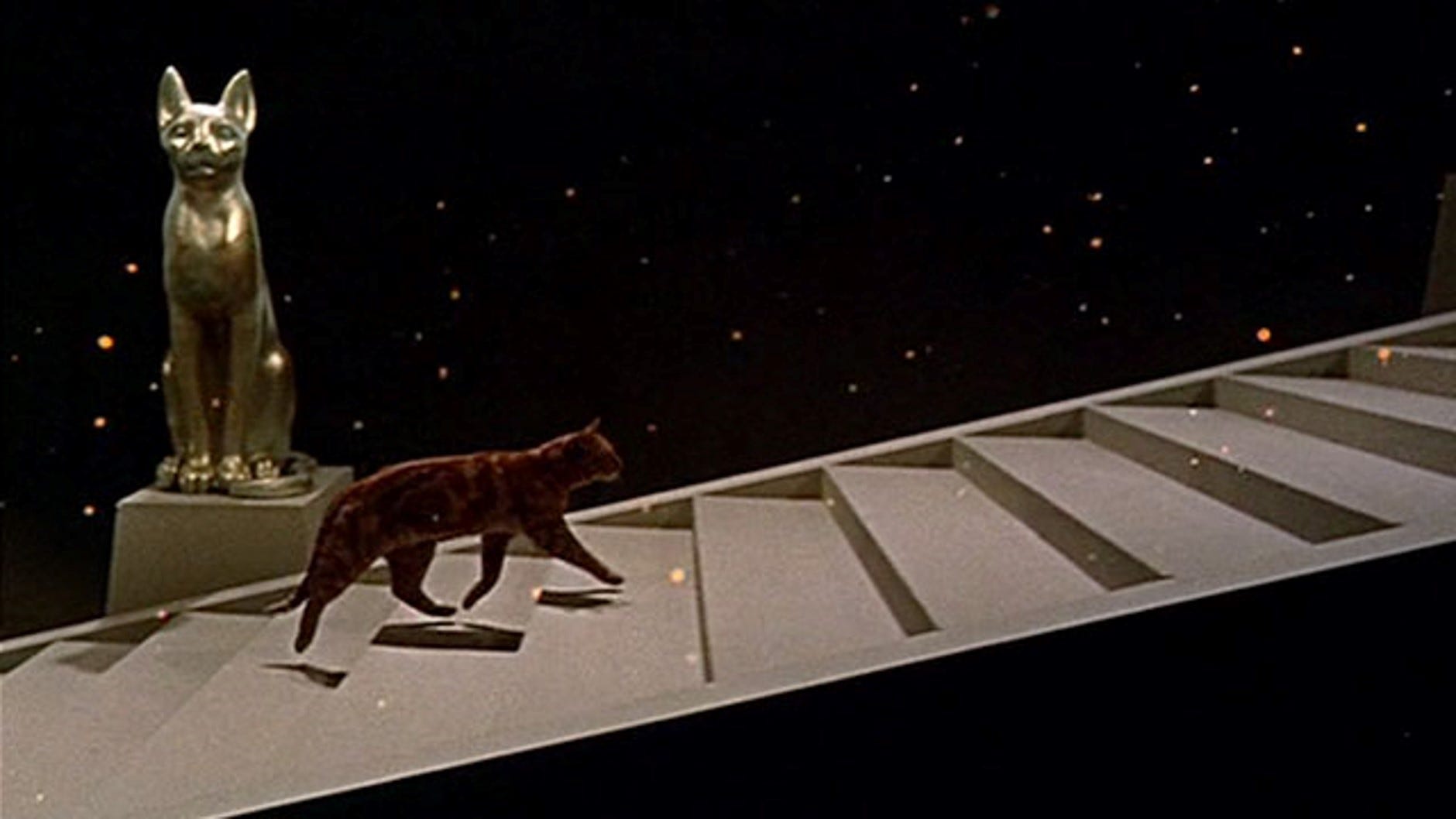
PIC: The Three Lives of Thomasina Disney 1963
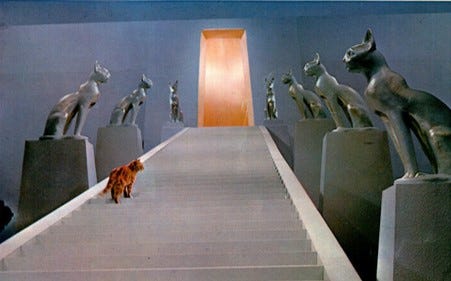
PIC: The Three Lives of Thomasina Disney 1963
Thomasina was one of the first films I remember seeing as a very young child, and it’s still a favourite. So deeply rooted in my imagination, it comes with the flavour of primal mythology, or scripture (in The Invisibles, Mason Lang says the film ‘Explains everything’ and he might be right). It’s a pretty good movie for kids in its own right, with a kind heart, likeable characters, and that early-Disney downplaying of sentimentality. McGoohan, with his typical beetle-browed fury, plays Andrew MacDhui, a Scots vet whose empathy and faith in God and are both shattered by the death of his wife, leaving him with a daughter and a cat he neglects. Thomasina’s seeming death cues up a satisfying redemption arc, you’ll be pleased to know.
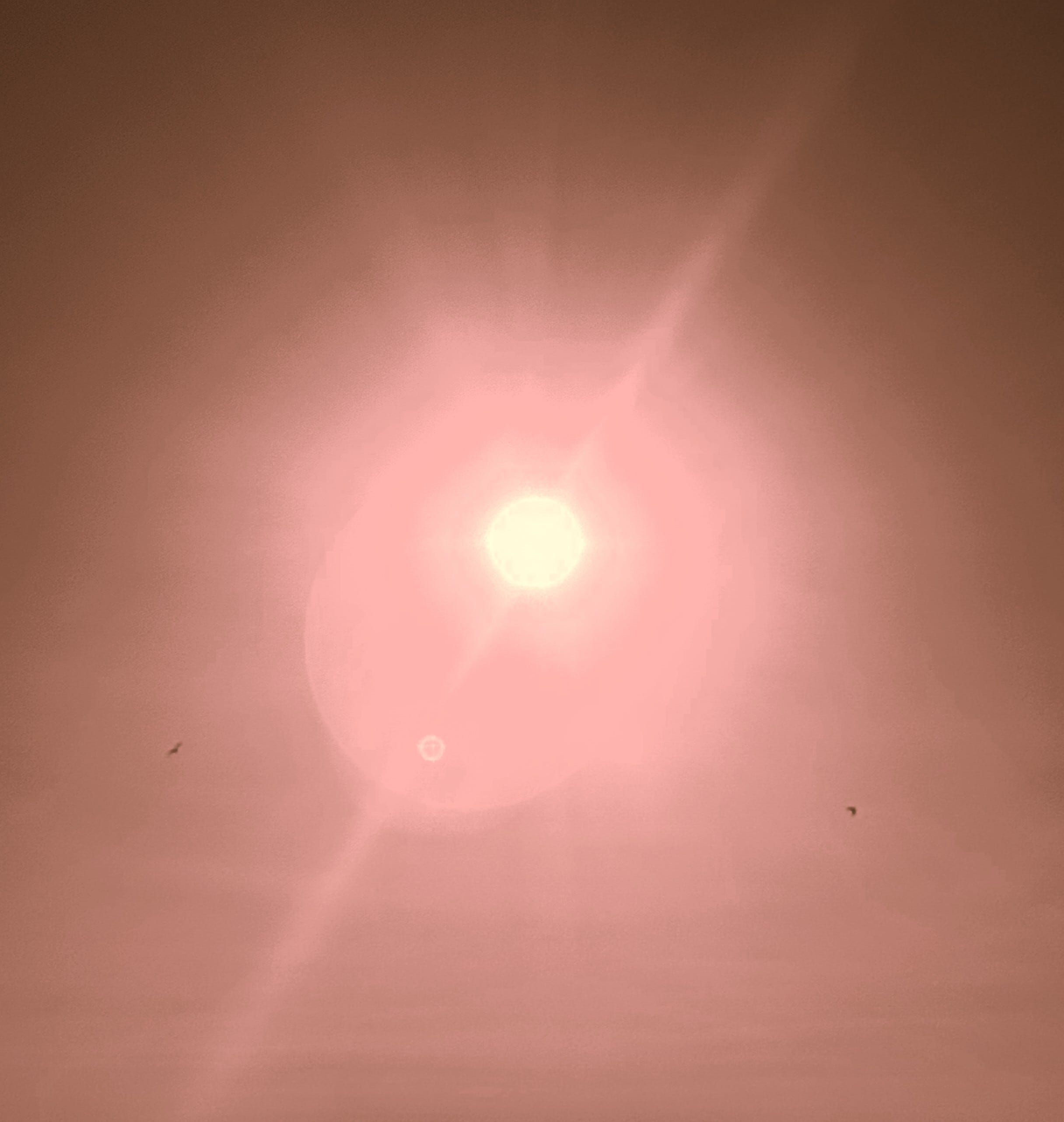
As the end arrived in an avalanche of microscopic moments, I was overwhelmed by images and emotions that seemed to peak and collide until it was as if a blinding sun exploded behind my eyes. Ruby died and the watch alarm went off. I found myself on the bleeding edge of delirium trying to syringe drops of milk formula into a dead kitten’s mouth.
The rawness of the real has the true texture of mythology. Unmediated, present, unfiltered, so that it feels everything else is playacting. The protective shields don’t hold, the armour cracks, admitting the true moment and everything becomes suddenly bigger. All our stupid quarrels and misunderstandings, our distractions and consolations are rendered absurd by the scale and certainty of life and death. In the material world, it’s all just meat and motion but in the mind, the imagination, a tiny kitten can become radiant, solar as she dies, emitting pure revelation, base matter alchemised via participating mind into symbolic gold, where a miniature life is extended into the ideatic realm as an alchemical ruby cat star.
The gold glittering in this muck of mortality was a vast sense of privilege that overcame my senses. I felt honoured to have met this brief creature and shared in her magnificent life.
Her body still felt warm, rigor mortis never seemed to set in, so she lay like a Buddhist saint for days, surrounded by flowers, before I buried her and her brother together.
What rips me up is the lost potential. Ruby’s eyes never opened to see the world she’d made it to. Those miniature perfect feet and claws, made to run and climb, hunt and play, that never got their chance.
So all this got me thinking about Superman, and what I feel so many writers who tackle the character miss.
There are many well-meaning stories where otherwise talented creators choose to show Superman cracking under pressure. At one end of the spectrum Superman suffers agonizing guilt or grief, while at the other, he goes mad, or decides to become a murderous tyrant, in that way you do when things don’t work out the way you want them to. Were you to ask these writers if their own personalities are so fragile they’d go into complete reverse at the drop of a hat, they’d likely respond with outrage and denial, and yet they think Superman, who can move planets, would have flimsier convictions than they. The notion that his kindness is a veneer over a totalitarian core is relied upon with a regularity that speaks to a grand lack of imagination. There’s a curious refusal to think for more than a few seconds about what being Superman might actually mean.
Here is where I get frustrated. In attempts to ‘ground’ Superman or make him ‘relatable’, (as if he’s not), the ‘super’ is often overlooked in favour of the ‘man’, where ‘man’ tends to equal frailty and doubt. It’s easy to see why. The Superman/Clark duality inclines us to think of Superman as an uneasy alliance of Alien Superbeing Kal-El and Clark the Man. Kal-El is a performer too, however, and Superman is a performance, just as Clark is. The base level Clark Kent/Kal El who grew up in Smallville, and who is the fusion of the two sides, is the only one not putting on a show. Superman is fundamentally an entertainer, which may be why he was so powerfully drawn to the actress Lyla Lerrol when he went back in time to his home planet before its destruction and got to hang out with his mom and dad.
The Superman is the amalgam of the Kal and Clark elements. Growing up with only his basic Kryptonian enhancements – conferring superhuman speed, strength, stamina, durability – Clark Kent knew pain, fear and sadness like any normal boy. He surely remembers how they felt but with the advent of his full superpowers during puberty, these things, like bullets and bombs could no longer hurt him in the same way.
Superman, for me, is not a fantasy of unaccountable, skyborn U.S. power, as some like to suggest, but the fantasy of a powerful yet kind-hearted man who defends the vulnerable and protects the weak without demanding anything in return, and who uses his strength to deter bullies. Superman has remained meaningful because he speaks to something in all of us, a part of us that can and does rise to difficult challenges, that rips off its shirt to reveal an ‘S’ when we are called upon to handle seemingly insurmountable problems.
Equally, the focus on the ‘super’, where Superman is the king of the superheroes, or an abstracted symbol of ‘hope’, fails to capture the essence. It’s ‘Superman’. It’s Man Plus.
Which is why Superman wouldn’t suffer like me, if he tried and failed to save a life. He might feel the same pangs of remorse, but then his super emotional intelligence would kick in. He would remind himself that even he can’t expect to save everyone, but he always does his best. He would know that to be true, and berate himself no further. He would mourn with equanimity then rededicate himself to his task. Just as he can’t be hurt by bullets or bombs, neither can Superman be undermined by anguish or guilt or fear. They bounce right off him.
So, rather than showing us a Superman who breaks down or turns against his principles at the slightest hint of tragedy in his life - an approach which only tells us what we already know about the most frangible human beings under pressure – might our creative people try thinking instead, ‘I wouldn’t show Superman being cut by a blade, why would I show him being destroyed by grief? How would he really handle it?’
And how does a fragile Superman help the readership deal with their own problems? Seeing Superman succumb to grief, go mad, and kill Batman as a response, doesn’t help me feel better. I need Superman to provide tips on how to rise above the hurt and loss that can undermine us, and continue to be proactive and helpful.
I could write a Superman story where he suffers from guilt after failing someone. Right now, I could identify with that feeling, but as I’ve said before, Superman is not Christ. I don’t want him to suffer in my place, I want him to triumph, and by doing so, show me how it’s done. The more interesting and personally useful Superman story, as I see it, is where he is overcome by grief or anger and then we watch him process those emotions into something he can use to make the world better. Just as he’d lift a mountain or tame a tsunami, I want to see a Superman who shrugs off mountains of guilt or anguish just as easily.
He would sit for a while processing his lost, then he’d build a memorial to the person he let down, and he’d get back to being Superman. That’s how he rolls.
This then is my Fortress statue to Ruby, a tiny cat who barely lived but struck me in the heart like a bolt of purest cosmic lightning…
I READ THE WARCRY
Before all that, this week and last, I’ve been researching the history of the Salvation Army, luxury resorts in Jamaica, George Bernard Shaw, and how to defeat a robot dog in a fight, for various projects currently underway.
I drilled back into the dream film thing I’ve teased, and it flamed into life, crackling merrily until the new draft was done. Very excited to tell you what this is soon! Everything is lined up for this one to happen, so more news as it transpires.
Next came a long Zoom conversation with my old pal and Century Guild supremo, Tom Negovan. Among his many accomplishments, Tom recently restored the notorious 1979 film, Caligula, with Malcolm McDowell as the mad emperor, and basically recreated the entire movie using previously discarded footage. On our epic convo, we discussed the history of symbols, their use in Magic, and their development through the history of Art, for an exciting upcoming something.
I read Al Ewing’s Absolute Justice League and thought it was a masterclass in contemporary superhero storytelling. All the lessons of the last 40 years in comics and serial TV perfected and directed like a laser. Nice one!
I finished A World Appears, which was fairly inconclusive but provided much nourishing food for thought. I read Solace House, which I’m not entirely sure about. I think I mostly enjoyed it, but like The Blair Witch Project, it sustains an atmosphere of anticipation for hundreds of pages before offering a conclusion that doesn’t entirely satisfy. I don’t know if it really delivered on its promise but it certainly kept me reading. It was another of those things I stumble across more often these days where the writer appears to have been reading me and Alan Moore when he was younger.
Which brings me to There Is No Anti-Memetics Division by Qntm, which was great. I loved the bare simplicity and directness of the prose, and the powerful effectiveness of its restraint, which rendered the terse depictions of apocalypse all the more unnerving. Again, lots of Moore, me, and Rian Hughes in the mix but very much its own thing and worthy of instant classic status. U-2315 is already loose in the world, I fear.
Now I’m on I Hear A New World, the second in Alan Moore’s Long London series. I think I prefer this one to the first but I’m only a couple of chapters in and they just got back to the Great When. It seems to have more depth and texture so far and Moore’s prose has a new easy rhythm and assurance, although the wry, comedic tone of the narration tends to undercut any tension. I still don’t find the characters very engaging, but I think the series as a whole will wind up as a significant addition to Moore’s canon.
Obelisk - The Man In The Tower
I particularly enjoyed this entry in the Obelisk analogue horror series. I often have dreams exactly like this, and when I say exactly, it’s no exaggeration. The multiplying spaces, stairways, never ending doors that open onto half-rooms and more stairs, more doors, a kind of Lovecraftian proliferation of spaces and angles, staying just ahead of the pursuit… they’re all too familiar and oddly comforting.
It goes without saying that any readers who find uncomfortable the thought of running through endless claustrophobic doors, narrow stairways and empty rooms, on the run from an uncanny pursuer are advised to steer clear.
I’m fascinated and drawn to this world of odd and melancholy horror nostalgia. The notion of memories degrading – also a feature of the Backrooms movie - suggests that the new frontier of fear after all those billionaire zombie nightmares is a kind of ontological Alzheimer’s, where the loss of memory definition leaves a distorted echo of some original, comfortable reality, now reproduced and reiterated, twitching with glitches that proliferate through each degraded copy, into something uncanny, unfamiliar, unheimlich. Like the world we’re in now compared to how it used to feel!
The notion of former childhood playmates, imaginary friends, or magical toys becoming forgotten, and losing themselves to distortion, deformity, monstrosity, while still retaining a poignant glow of their former kindly purpose shows up in many of these gloomy forays too, again pushing this slow drip of amnesia as a new locus of terror in our lives.
I finally watched my Team Human episode with Doug Rushkoff, which struck me as an unusually ‘punk’ performance, during which I maintain an expression of total disgust for over an hour! That high-pitched whine of steaming rage ending almost every sentence! Every contemptuous syllable spat out as if the flavour of thinking about these billionaire politics pricks was converting to pure bile!
Good heavens!
So unlike the avuncular rumble and Santa Claus twinkle of Alan Moore!
Alan Moore on Reclaiming Our Imagination from the Authoritarian Overlords
It’s getting hard, I feel, to make a convincing claim that there’s any kind of feud or War in Albion when the alleged combatants are broadly in agreement and make many of the same points, using the same language…
HOT COP DRAG
Dorothy – bravo! I love these poetic distillations of our themes!
Brigitte – And you! So many old churches are haunted by these flagrant, leering embodiments of fertility.
Sean – Is that the Providence piece you trailered over at Shelfdust? I thought Providence, especially the first four issues, was genuinely eerie, and deeply immersive, and I’m looking forward to your thoughts.
Thanks for the kind words on Black Knot.
I haven’t played the Alan Wake games, so have no basis for an opinion. What’s your take? Are they sort of Lovecraftian things?
Jwparrishiii – Kickstarter has never really appealed to me, but that could change! It’s taken years for Frank Quitely to finish Dead World, so the chances of him starting something else and having it done within our lifetimes seems remote.
DeeSee - The Prince William headline was something I saw in a newspaper. I’ve no idea what it referred to, and I think there was more to it, but I cut it there (though perhaps it would have been better if I’d written ‘Why I don’t believe in Prince William’ with the suggestion that he’s more like the Loch Ness Monster or an honest politician). My sub-headings are usually lines from songs I’m listening to, (‘Yardstick for Lunatics’ was from Incense and Peppermints by the Strawberry Alarm Clock for instance) or headlines I’ve read, often with some words changed for non-sequitur effect. On odd occasions, I’ll just make something up. You’re not missing any hidden significance.
Today for instance, I noticed two headlines on a pile of Times newspapers – with Dawn French saying, ‘I’ve survived grief and loss’ (my thought: welcome to the human race, Dawn! Hope you survive the experience!) and the classic ‘I’m 61: Why shouldn’t I wear a bikini?’ To which the answer is surely ‘Because you’re the bloody Archbishop of Canterbury!’
I’m envious and fully supportive of your refusal to engage with the hysteria of the shitosphere, and feel slightly guilty for exposing you to any of its fetid contents. When I decided to write this newsletter, I knew I’d have to scout around the internet looking for things to motivate a weekly column. Stuff I could react to, so I wasn’t just talking about seagulls and crows and village politics (a Trumpian nightmare of villains and exploitation, interestingly and vexingly enough).
What I found, scrolling merrily through news, views, and YouTube content delivered by an unholy chorus of howling contending voices, was a delirious vision of a world convulsing in horror and desire, a perpetual doomsday imagineered by powerful sado-fascist overlords and amplified to a scream by the media, as if under orders to keep us enthralled and powerless in bewildered, bedazzled paralysis.
I think it might be Oceania versus everybody this week but there’s always a new fixture to look forward to as these premiere league countries square off for the cup.
And I only came to read the meter, missus!
If you value basic decency and truth, the news is incredibly disheartening, even depressing. I don’t find it a healing inoculation of grime but a download of pure unfiltered sick designed to demoralise! Having written The Filth, however, I feel I’ve developed an immunity to these hazardous materials and I love trying to purify them into googly prose.
‘We’ll take your poisons and piss them out as vintage champagne!’
One final ranting example before we leave the news to devour itself in the corner.
The BBC 6 o’clock news, which often boasts of its objective, balanced coverage is a cess pit of torture porn, visceral shock imagery, and a deliberate refusal to engage with real world news. They know people are sitting down with their dinner, so they exploit that vulnerability to reinforce anxiety. Only this evening, I happened to turn on to find a top story about how hot it is the UK and elsewhere, as we near Midsummer. This was followed by a graphic report about a decline in British birds of prey, which came with brutal and wholly unnecessary found footage of men beating the fuck out of innocent hawks in cages. Still reeling and choking on our tempura, the next item brings a graphic story of breast cancer that went untreated by a dodgy doc, complete with bloody close-up surgery. Then it’s half an hour of ‘football team wins football match’, as if that’s somehow unusual enough to report. Nothing about politics, now warnings about the fascists lining up to seize and bleed the UK. Instead, a relentless tide of A Clockwork Orange-style Grand Guignol atrocity footage.
‘Toxic’ barely covers it!
3 Against Mystery isn’t a horror story, so you should be okay there (although I see from a later response that you’ve read it now – thanks for the kind comments!) It’s a kitchen sink drama with magic mushrooms to make the mundane sparkle. The Cthulhu one does get a bit fucked up in places, so you can skip that if you’re not keen on feeling bleak.
Unity’s recreation of Paris, with the massive seething crowds is spectacular, I’m 27 hours into Crimson Desert and thoroughly digging the sprawl and invention, the breathtaking vistas (so much more appealing than the ‘Soulslike’ landscapes of screeching, mulched biology and cancerous castle keeps. I’ve barely begun, having spent most of the time that time exploring every area on the gigantic map, while still only on Chapter 5! It reminds me most of the Witcher Wild Hunt, which I loved, but even Wild Hunt didn’t have robot pterodactyls, zeppelins, hot air balloons, and trains in its fantasy world. I’m currently riding a circus lion around the map, and no-one can stop me!
Aside from games and the odd film or TV show, engaging with the world on the screen tends to leave me feeling physically uneasy, often outright nauseous.
As for where the words come from, for me, the words arise from feelings. I have a feeling I want to convert into a signal. The feeling transforms to words if I’m writing prose, or to pictures, then additional words, if it’s comics. The initial flood where there’s a build-up of energy that has to be released is not quite automatic writing, it’s more directed, more participatory, but shares a flow state effect of absorption and spontaneity.
When that happens, I’m racing to keep up with the movie unfolding in my head – ‘movie’ being simply an analogy for an immersive 360 ‘daydream’ that’s much more absorbing than any film.
When I write, it generally pours out in a huge, unformed mass of words that emanates from the universe through the lens that is moi. I only get some of it down and it’s distorted by my moods or level of attention but the first blast comes when a bunch of stray concepts develop interesting relationships to one another, clump together and then form an idea with its own gravity. I know what I want to write about but may not have worked out details of plot, (with comics I always began with key images that anchor the story), so I start on the exciting bits that best capture and recreate the feeling.
I usually get a lot of good material from that first Dionysian geyser of words – but there’s a great deal that doesn’t make it through editing. Sometimes only a sentence will survive to put out new shoots. Editing is where the real work starts. That’s where the Apollonian filter is applied, and the raw material is refined and organised through the mill of craft.
Nathan – The Prodigy are still worth seeing but it’s not the same without Keith. There’s no singing! I’ve seen them loads of times including one genuinely transcendent experience in the early 2000s and a lacklustre, insincere performance 20 years later in Glasgow. This was better than that deflated performance.
All of the entries in the Assassin’s Creed series share that historical educational appeal, where you’re running into Ben Franklin, Robespierre or Captain Cook, but I think Origins was the first one where they added the tour feature that allows you to stroll around immaculately reconstructed simulations of Luxor, or Cyrene without getting into fights, learning about the culture, the architecture and the local characters up close. I recall strolling around Alexandria with the guide and being sucked right into the past.
Magic K – the closing reveal in Red Sun, that Superman had been rocketed to the present from a doomed future was mine, but as Kurt Busiek himself has pointed out, that’s just the origin of Samaritan, the principal Superman stand-in from Astro City. My big twist was the closing reveal that the ‘El’ in ‘Kal-El’ was the ‘L’ in ‘Luthor’, abstracted through centuries of DC sci-fi names like Jordan Luth-R etc. The idea I was so pleased with was not Superman being literally the man of tomorrow, but the perfect ironic loop where Superman/Kal-El turns out to be the direct descendant of Lex Luthor!
I was still in a friend and mentor relationship with Mark at that time, and spent many enjoyable hours talking through his story problems on the phone. I suggested a few specific scenes and bits of dialogue for Red Sun – and I pointed Mark in the direction of some useful reference, like the Vietnam POW story that became Green Lantern’s origin - but Mark had the big concept and all the basics mapped out, and you may be surprised to learn that the letter reading ‘Why don’t you put the whole world in a bottle?’ was all Millar.
Osiris – Partially rested! Events as described above.
I love the editing process but find it hard to stop (I’m often amused when I read irate reviewers complaining that I needed an editor on Luda, when in fact Luda had four professional editors who worked on the text)!
I have a great many first editions of Luda! I’m afraid I’m in position to send them to anyone! Perhaps I’ll make them a prize for a competition or something!
Bobby – Thanks for the links to the interviews! Really enjoyed those!
Patrick – I don’t think the Joker is a chaotic force, and tend to agree with you here. When Heath Ledger’s Joker talks about being an agent of chaos in The Dark Knight, he’s lying. He claims not to have a plan, yet everything is meticulously set up. The Joker has always been a ‘plan ahead’ character since his very first appearance. And Batman’s a weird vigilante who doesn’t think the law applies to him.
Fr. Theta – I can’t get enough of this TARDIS talk! I had a line in my Doctor Who comic story, The World Shapers, about TARDISes being terrible gossips when they got together. I had another Time Lord dying in on the first page of that – his TARDIS was a huge sculptural crystalline thing, possibly the Marinus equivalent of a police box, that dematerialized with a smooth TZZZU TZZZZU, as I recall, instead of a gear-grinding wheeze.
Alice – the Wolf Hour, like the Devil’s Hour and the Witching Hour, is that eerie time between 1am and 3am. For our narrator ‘worrywolves’ are a play on werewolves – worries that turn into wolves that rip at your peace of mind in the raw pre-dawn! Avoid them if you can!
Ben – I’ve seen Under The Skin, but haven’t read the book. The landscape of the film is all very familiar to me – I love the idea that Scarlett Johansson just drove around Greenock and Port Glasgow picking up random guys in her van. Aside from that one ‘You look like that Scarlett Johansson,’ none of the men twigged it was her!
That’s folks, all! See you next time!
Love your insights into the connection between childhood and analog horror; a moment that's stuck with me forever is the bit in your Kid Eternity where Jerry comes across his lost teddy bear in hell. Some recent works that I'd absolutely recommend in this vein is the 2022 film Skinamarink, and the animated web series the Amazing Digital Circus which just wrapped up with its finale in theaters (this one is less horror and more in the vein of the new trans cinema like I Saw the TV Glow and The People's Joker)
I am not at this time writing about Providence. Every time I try to write about Providence, I end up with at least 10,000 words of structurally clever analysis that has my various editors go "But can you pare it down to a reasonable length?" It is an extremely dense book that I know I'm going to write about as a book one day, if for no other reason that it's one of two I owe my god, Arachne. (The other one is the project I'm currently working on and will hopefully have a first draft done by the end of 2027. It's about early 2000s media criticism and the rise of fascism.)
The various Alan Wake/Control games are very much in the weird fiction tradition that Lovecraft likewise arose from. Though their influences are more pagan in nature, especially given the Finnish nature of the studio creating them. Alan Wake II has the engagement with aging within a so-called legacy sequel that actually engages with the decay of the human body that only Twin Peaks: The Return has managed. (Whereas other legacy sequels skip past this aspect in favor of playing the hits.) Also, the musical numbers are a delight.
I'm glad the second Long London book appears to be better than the first. When I read it, I got the sense that it was written more for a YA/mass market audience than some of Moore's other, more recent books. Might check it out when the series as a whole is done. Also, Black Flame: highly recommended.
Besides Arden, what mystical figures are worth looking out for in the modern generation?